Clues in the space
A factory brings production stages together. From outside, consider entry, transport and display without inventing processes you cannot observe.
Parte del contenido está en inglés.Leer el original en portugués →
GAI-012 / City · Art and industry
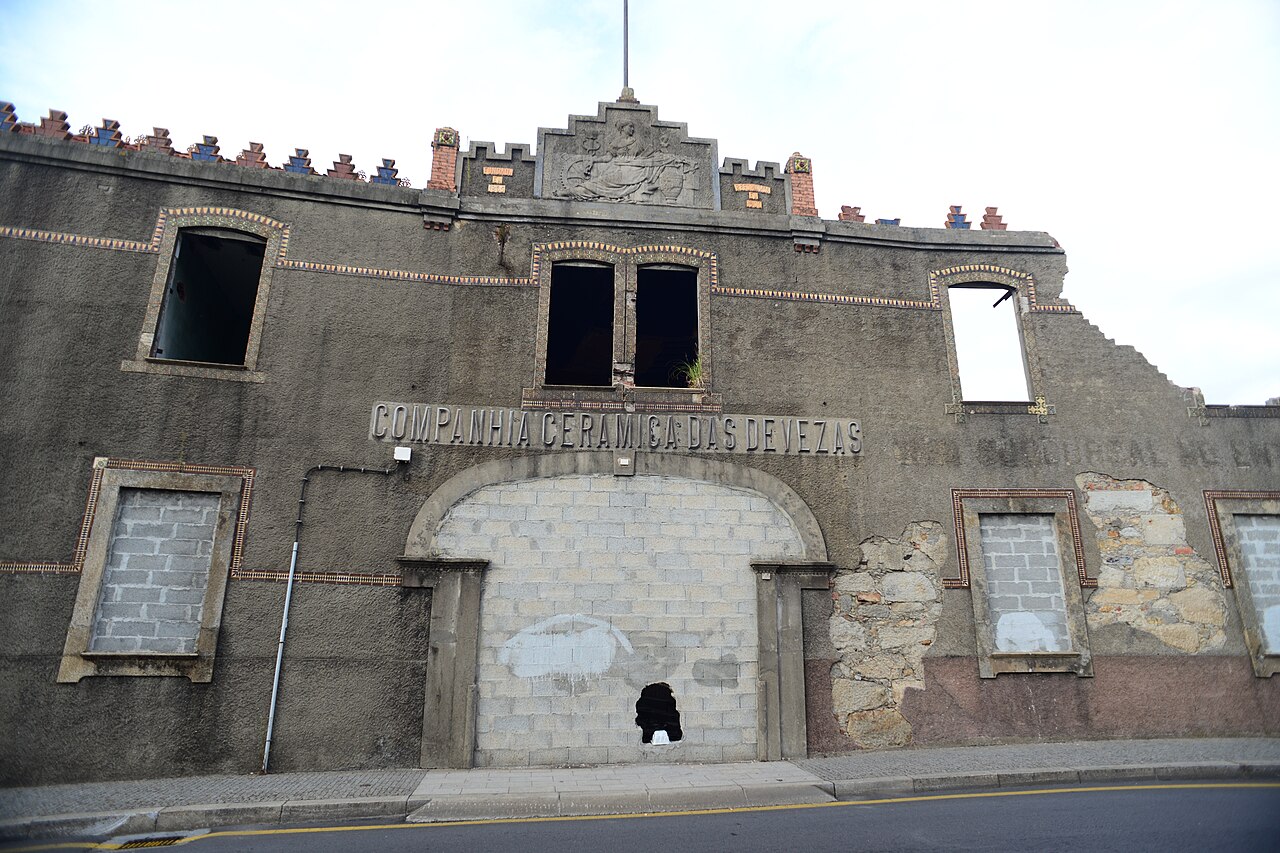
Fábrica de Cerâmica das Devesas
Rua Conselheiro Veloso da Cruz, Devesas, Vila Nova de Gaia
01 / Historias de edificios
Devesas reveals the production behind urban decoration. The heritage inventory dates the Gaia company’s inauguration to 1865. Its railway setting connects craft, transport and urban growth. The Porto materials showroom belongs to that history but is a different building.
From the public street, examine the entrance and visible fronts. Consider the people who designed, moulded, fired and transported the materials. Connect this reading with the Teixeira Lopes House Museum: how does an idea enter everyday streets?
Municipal plans proposed a museum on the former industrial site; a proposal does not establish opening. This stop is for exterior observation, without assured factory or museum access. Historical photographs do not establish present conditions.
Observe entrance, ornament and scale from the pavement; do not cross barriers or enter industrial buildings.
Fuente ↓02 / I Ching reflections
Transformation invites attention to the conditions turning material into objects and experience into craft. Notice the work supporting the result.
Above · Li · Fire
Below · Xun · Wind / wood
Read the six lines from bottom to top ↑
Zhou Yi · Commentary on the Image · Chinese excerpt
木上有火,鼎。Fire is above wood: Ding. — Editorial translation of the excerpt
Original text and context ↗Wood and fire give transformation an image. Ding also suggests a supporting vessel: an old space can hold new activities when structure, use and care work together.
This excerpt gives the natural image that opens the Commentary on the Image. The full passage relates it to personal conduct or governance in its historical context. Follow the source to read it in full. Applying it to buildings today is Xiaoxiong’s editorial proposal, not a summary of every meaning of the ancient text.
A factory brings production stages together. From outside, consider entry, transport and display without inventing processes you cannot observe.
Observe entrance, ornament and scale from the pavement; do not cross barriers or enter industrial buildings.
Reuse is more than a change of function. A preserved front can still omit working lives. Distinguish completed work, proposals and hopes; imagine a public future that also retains specific experiences.
Take a question to the bench
What should an old factory retain when its use changes?
Go to the bench and note what I saw →A contemporary cultural interpretation by Xiaoxiong. The diagram and excerpt have a source; the building connection is editorial, not architectural intent, historical I Ching influence or the venue’s position.
03 / Vida del barrio
Abrir mesas cercanas · filtros y cómo llegar →
Locales a tres kilómetros en línea recta del edificio. Muros, vías y pendientes pueden alargar el recorrido; comprueba la entrada y si el local está abierto.
Comprobando la red Banco y las reclamaciones…
Esta selección abarca Gaia. Cruzar el Duero hacia Oporto cambia el trayecto; planifica el transporte.
El directorio puede tener omisiones. Los registros no confirman apertura, carta ni reservas. Se muestran primero las direcciones completas.
04 / El Banco
What should an old factory retain when its use changes?
Ricardo Saraiva de Almeida · CC BY-SA 4.0 · Ver la fotografía original ↗
La presentación puede recortar la imagen. Consulta el original. La foto no representa el estado actual del lugar.
Consultado: 2026-10-22