Cropped preview; see the original photograph. The photograph does not confirm the venue’s present condition.
01 / Building stories
Read a building, discover a way of living.
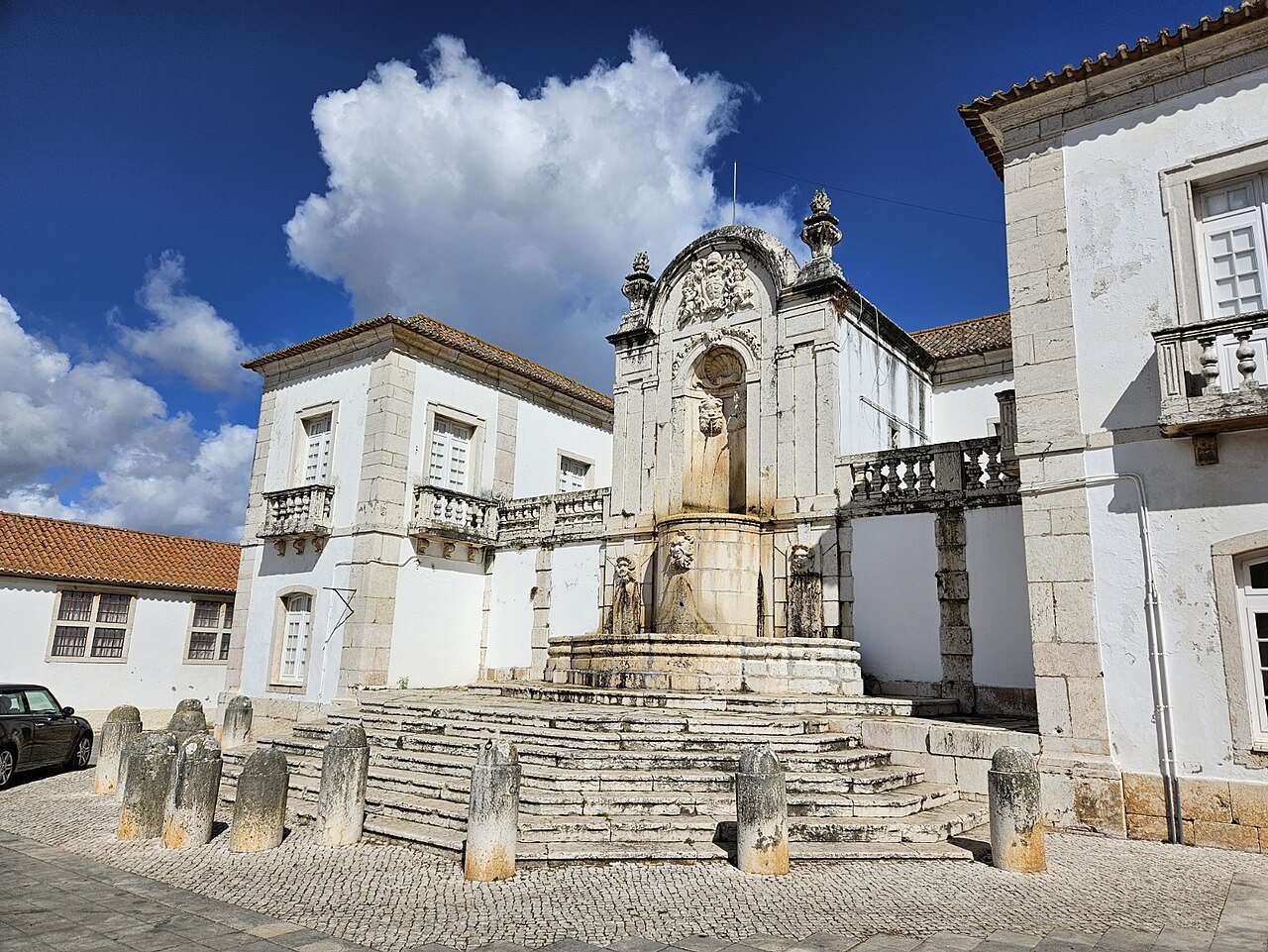
Palace, church and fountain face the square, forming a major front of the eighteenth-century Tojal ensemble. Municipal information associates these alterations with António Canevari. The tall carriage gate and elevated features retain the scale of reception and ceremony.
Read the whole before its details: how do doors, windows and fountain respond to each other and direct attention to the square? The palace later acquired social-service uses associated with Casa do Gaiato. History and current lives coexist; interior visits require arrangements and users’ privacy matters.
What to notice
From the square, compare palace entrance, church and fountain orientations. Book interior visits and do not approach restricted areas to photograph users.
A square accommodates different purposes. Sharing a place also means leaving room for other people’s everyday lives.
Start with the architecture
From an unobstructive spot, see palace, church and fountain together. Move a few steps and compare places of passage and stopping. The palace’s current use makes the boundary between public space and private life especially important.
Bring the question into everyday life
Leaving a passage clear, checking whether photography intrudes and listening to local explanations are small acts of coexistence. In your neighbourhood, notice who easily finds a place to pause and who does not.
Try an observation here
Choose a corner clear of passing traffic and observe movement and pauses without recording strangers’ private details.
Who should your ideal shared space make room for?
A contemporary cultural reading by Xiaoxiong inspired by the I Ching. The connection with the building is an editorial perspective, not the architect’s intention or a documented historical influence. It is not fortune-telling.
03 / Nearby life
A nearby table
Dining map records within three kilometres in a straight line of the reference point. Walls, railways and slopes may lengthen the journey. Check the entrance and whether the business is open.
The map may omit businesses. Records do not confirm trading status, menus or bookings. Records with an address are shown by default; you can include the others.