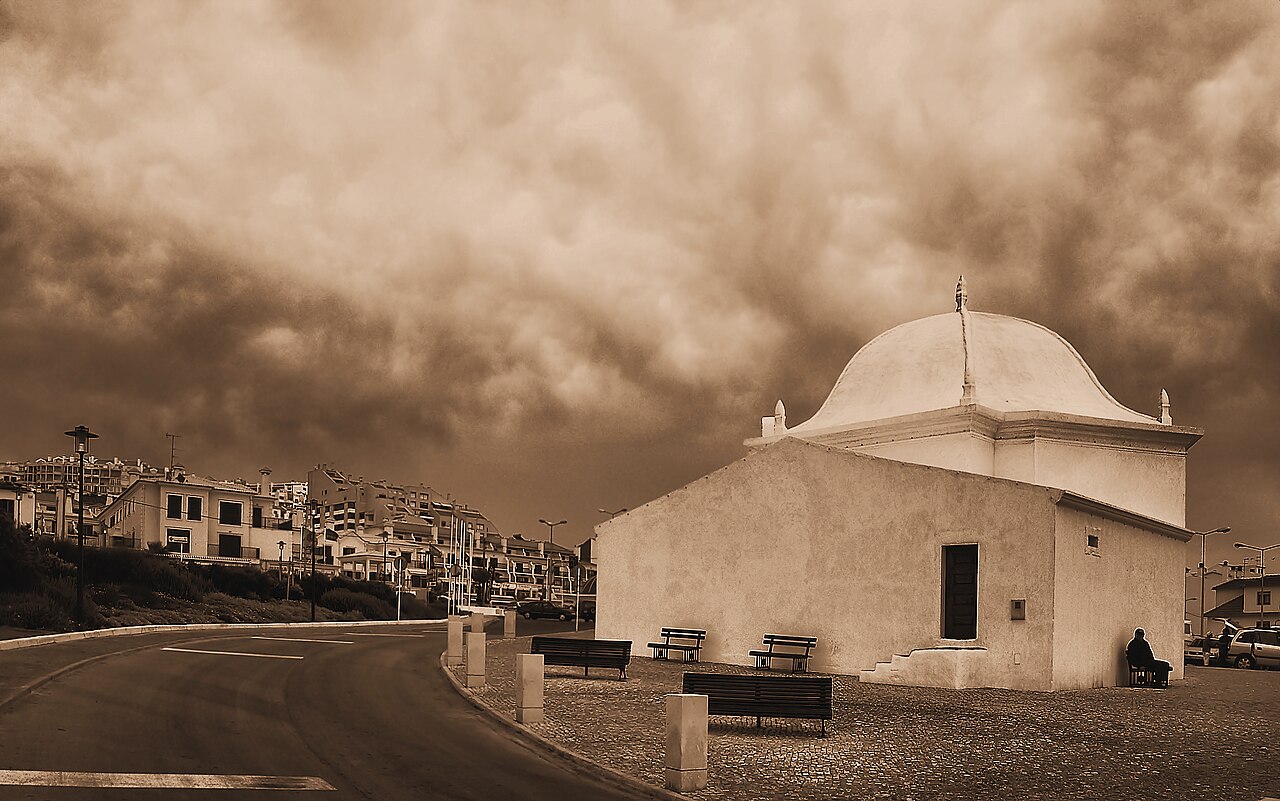
Cropped preview; see the original photograph. The photograph does not confirm the venue’s present condition.
01 / Building stories
Read a building, discover a way of living.
On the town’s northern coast, the small chapel brings together changes from different periods. The municipal source highlights seventeenth-century tiles and residents’ involvement in installing its altar.
Begin with its coastal setting from the public square. If it is open, notice how repeated tiles form a whole; otherwise, compare doorway and walls and keep a reason to return.
What to notice
Observe building and coast; if access is permitted, follow the rhythm of the tiles.
Xiao Chu turns attention towards small accumulations. A tile does not explain an entire building, but it can reveal repetition, repair and patience.
Start with the architecture
In a small building, boundaries become legible. Begin with a joint or repeated motif and divide the whole into observable parts.
Bring the question into everyday life
Which small repeated act would improve your life? You need not wait for abundant free time to make room for care.
Try an observation here
Find a repeated element and one small difference.
Which small act would you like to begin repeating today?
A contemporary cultural reading by Xiaoxiong inspired by the I Ching. The connection with the building is an editorial perspective, not the architect’s intention or a documented historical influence. It is not fortune-telling.
03 / Nearby life
A nearby table
Dining map records within three kilometres in a straight line of the reference point. Walls, railways and slopes may lengthen the journey. Check the entrance and whether the business is open.
The map may omit businesses. Records do not confirm trading status, menus or bookings. Records with an address are shown by default; you can include the others.
04 / The travellers’ Bench
Sit for a while. Leave an observation.
Which small act would you like to begin repeating today?