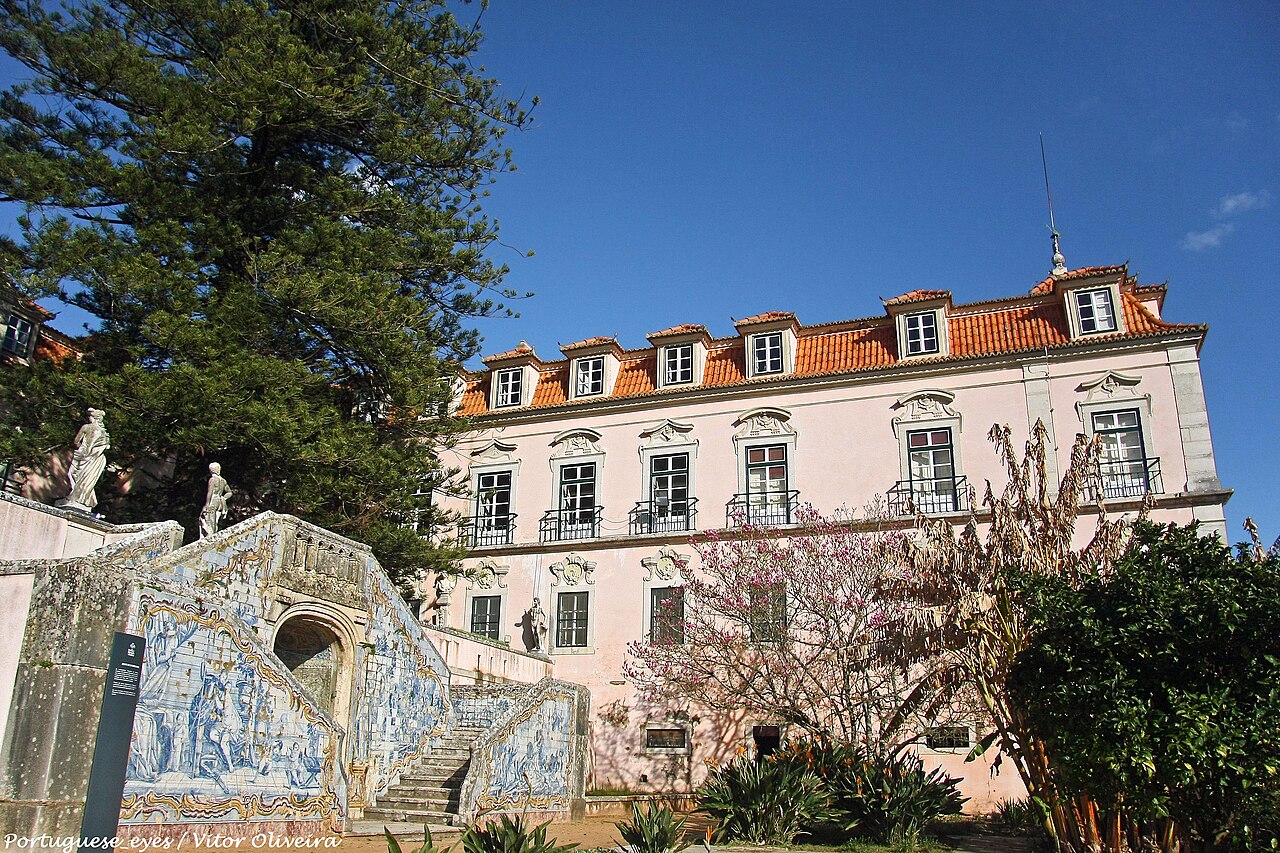
Cropped preview; see the original photograph. The photograph does not confirm the venue’s present condition.
01 / Building stories
Read a building, discover a way of living.
This eighteenth-century palace connects family life, gardens and estate management. Turismo de Portugal attributes its architecture to Carlos Mardel and records its National Monument status. Start with the relationship between house and garden: how did land, water and labour organise a world larger than the residence itself?
What to notice
From permitted areas, follow the sequence of doors, courtyards and gardens. Where are you invited to pause or move on?
The family theme invites reflection on care and shared responsibilities. The scale impresses, but daily maintenance sustains a place. Whom does this order serve, and whose work disappears from view?
Start with the architecture
Doors distinguish visitors, residents and workers. A path approaching the house reveals responsibilities and distances as well as intimacy. Many people's labour sustained the image of a grand home.
Bring the question into everyday life
Lasting order needs to recognise needs and share responsibilities. Consider an overlooked task at home or in your team: does it need thanks, help or redistribution?
Try an observation here
Choose a threshold or garden path and imagine one task required to maintain it.
What small task would you undertake regularly for a shared space?
A contemporary cultural reading by Xiaoxiong inspired by the I Ching. The connection with the building is an editorial perspective, not the architect’s intention or a documented historical influence. It is not fortune-telling.
03 / Nearby life
A nearby table
Dining map records within three kilometres in a straight line of the reference point. Walls, railways and slopes may lengthen the journey. Check the entrance and whether the business is open.
The map may omit businesses. Records do not confirm trading status, menus or bookings. Records with an address are shown by default; you can include the others.
04 / The travellers’ Bench
Sit for a while. Leave an observation.
What small task would you undertake regularly for a shared space?