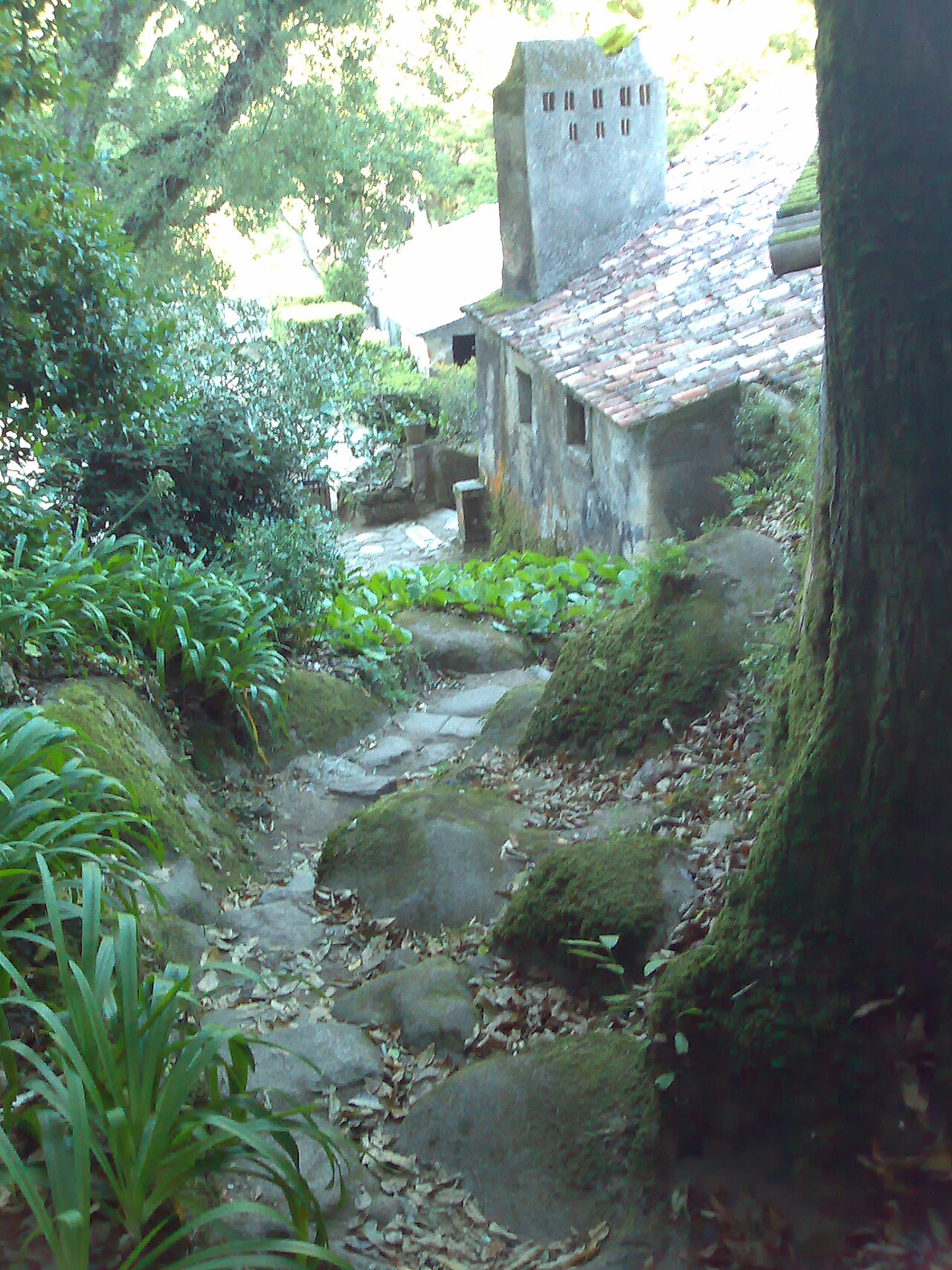
Cropped preview; see the original photograph. The photograph does not confirm the venue’s present condition.
01 / Building stories
Read a building, discover a way of living.
Founded in 1560 at the initiative of Álvaro de Castro, the convent connects simple spaces with religious life. Its buildings follow rocks and woodland; cork explains the name sometimes given to it, the cork convent. Comparing it with Sintra's palaces offers another measure for asking how much space we need.
What to notice
Notice adaptation to the terrain and how room sizes affect your body.
Reducing something may free space or remove essential support. Needs differ with each person's body and circumstances.
Start with the architecture
Rocks, low rooms and cork bring attention close to the body. Religious life had its own historical setting; today's visit allows reflection on needs without summarising the experiences of former residents.
Bring the question into everyday life
Simplicity cannot be measured only by counting possessions. Compare comfort, limitations and care without forcing yourself into unsuitable spaces. Responsible choices recognise what you actually need.
Try an observation here
Notice a space that makes you contract or relax. What would you remove from luggage or plans to regain energy and attention?
What burden would you like to set down?
A contemporary cultural reading by Xiaoxiong inspired by the I Ching. The connection with the building is an editorial perspective, not the architect’s intention or a documented historical influence. It is not fortune-telling.
03 / Nearby life
A nearby table
Dining map records within three kilometres in a straight line of the reference point. Walls, railways and slopes may lengthen the journey. Check the entrance and whether the business is open.
The map may omit businesses. Records do not confirm trading status, menus or bookings. Records with an address are shown by default; you can include the others.