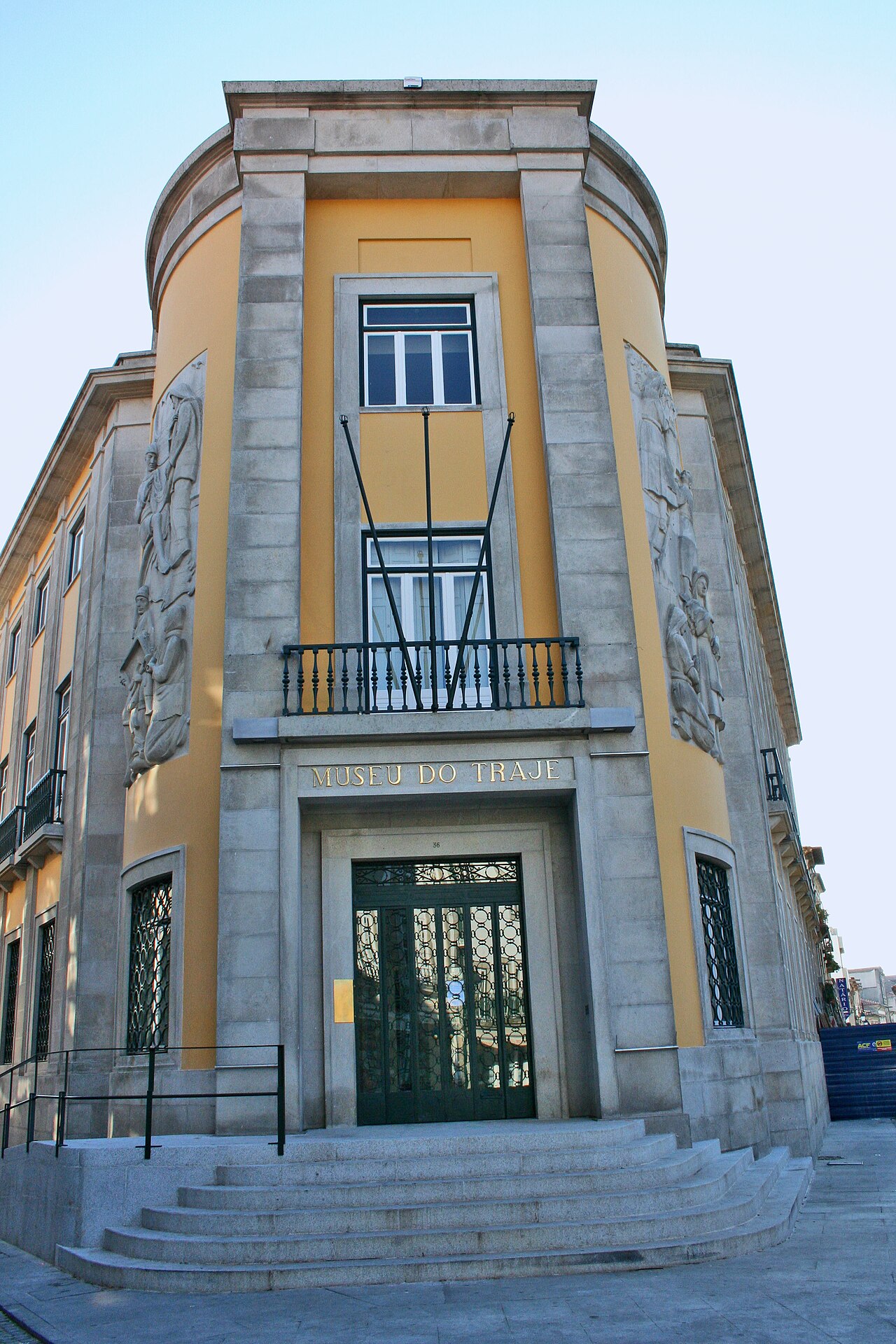
Cropped preview; see the original photograph. The photograph does not confirm the venue’s present condition.
01 / Building stories
Read a building, discover a way of living.
The Costume Museum has occupied the former Bank of Portugal building since 2004. Financial architecture and clothing culture meet here.
Observe its relationship with the square, then look for materials, stitches and ways of wearing garments. Clothing contains work of making, maintaining and using.
When encountering tradition, ask who wears it and how it continues to be made. The museum offers clues; life keeps changing.
What to notice
Move from the bank façade to garment details and the work of making.
Grace invites inquiry into ornament’s origins: time and manual skill accompany beauty.
Start with the architecture
Building and fabric move the gaze between different scales.
Bring the question into everyday life
Valuing an object can begin with understanding how it is made and repaired.
Try an observation here
Choose a garment, observe a seam or pattern and read its stated use.
Which everyday object deserves a closer look at how it was made?
A contemporary cultural reading by Xiaoxiong inspired by the I Ching. The connection with the building is an editorial perspective, not the architect’s intention or a documented historical influence. It is not fortune-telling.
03 / Nearby life
A nearby table
Dining map records within three kilometres in a straight line of the reference point. Walls, railways and slopes may lengthen the journey. Check the entrance and whether the business is open.
This selection covers the current municipality. Near hills, rivers and municipal boundaries, plan transport using actual roads.
The map may omit businesses. Records do not confirm trading status, menus or bookings. Records with an address are shown by default; you can include the others.
04 / The travellers’ Bench
Sit for a while. Leave an observation.
Which everyday object deserves a closer look at how it was made?