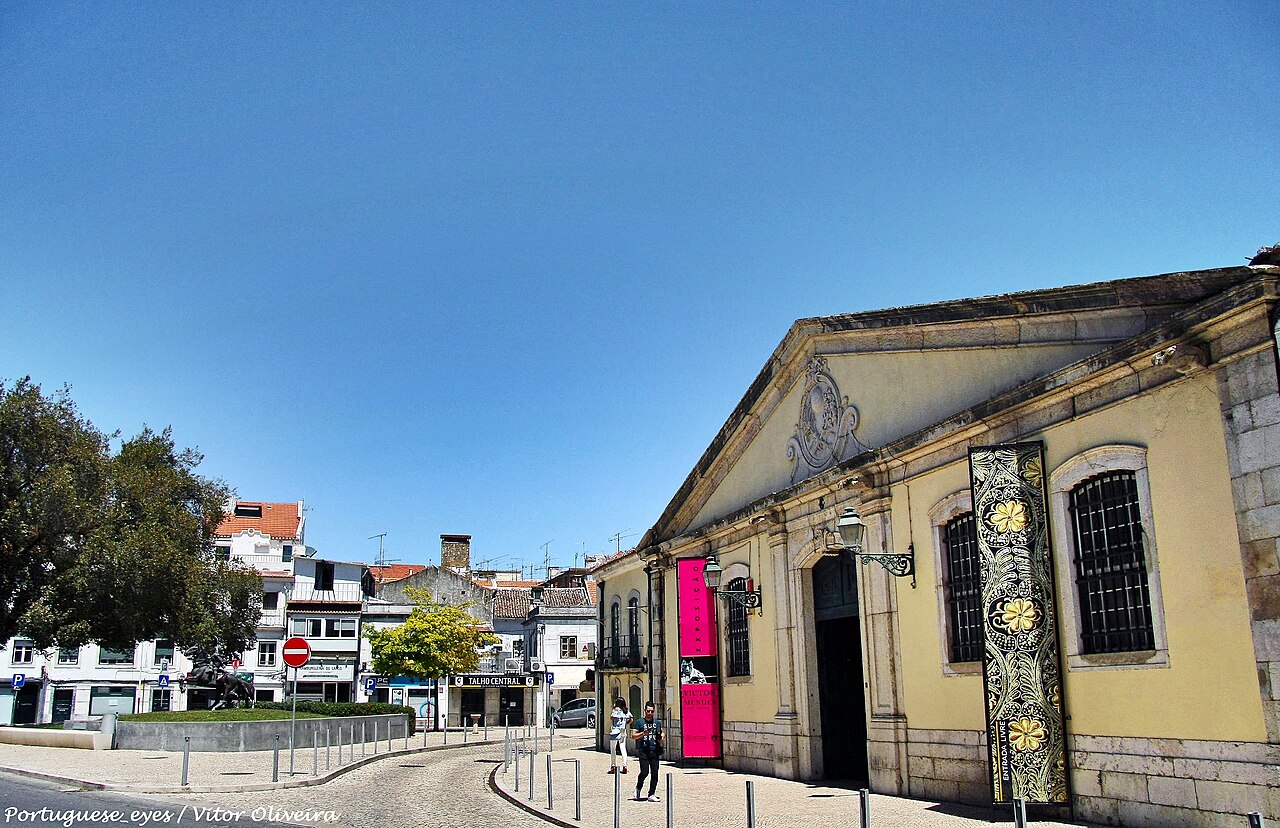
Cropped preview; see the original photograph. The photograph does not confirm the venue’s present condition.
01 / Building stories
Read a building, discover a way of living.
This eighteenth-century granary served the Lisbon Patriarchate; its design is attributed to José Custódio de Sá e Faria. A triangular pediment and substantial entrance give civic presence to a storage building now used for cultural activities.
Consider what storage requires: access, protection and eventual release. With a new use, the building still organises movement and care.
During an open exhibition, compare the entrance with the interior’s use. Otherwise, view the façade from the street.
What to notice
Compare the proportions of pediment, doorway and façade.
Da Xu invites reflection on the purpose of reserves. Keeping something requires organisation so it can serve when needed.
More quantity does not always mean greater availability. Ask what use and possibilities for sharing your own accumulations have.
Start with the architecture
Read the entrance as a threshold of exchange: what enters and leaves?
Bring the question into everyday life
Choose something kept unused for a long time and find a suitable use.
Try an observation here
Note one resource you would like to share.
What occasion are your reserves waiting for?
A contemporary cultural reading by Xiaoxiong inspired by the I Ching. The connection with the building is an editorial perspective, not the architect’s intention or a documented historical influence. It is not fortune-telling.
03 / Nearby life
A nearby table
Dining map records within three kilometres in a straight line of the reference point. Walls, railways and slopes may lengthen the journey. Check the entrance and whether the business is open.
The map may omit businesses. Records do not confirm trading status, menus or bookings. Records with an address are shown by default; you can include the others.