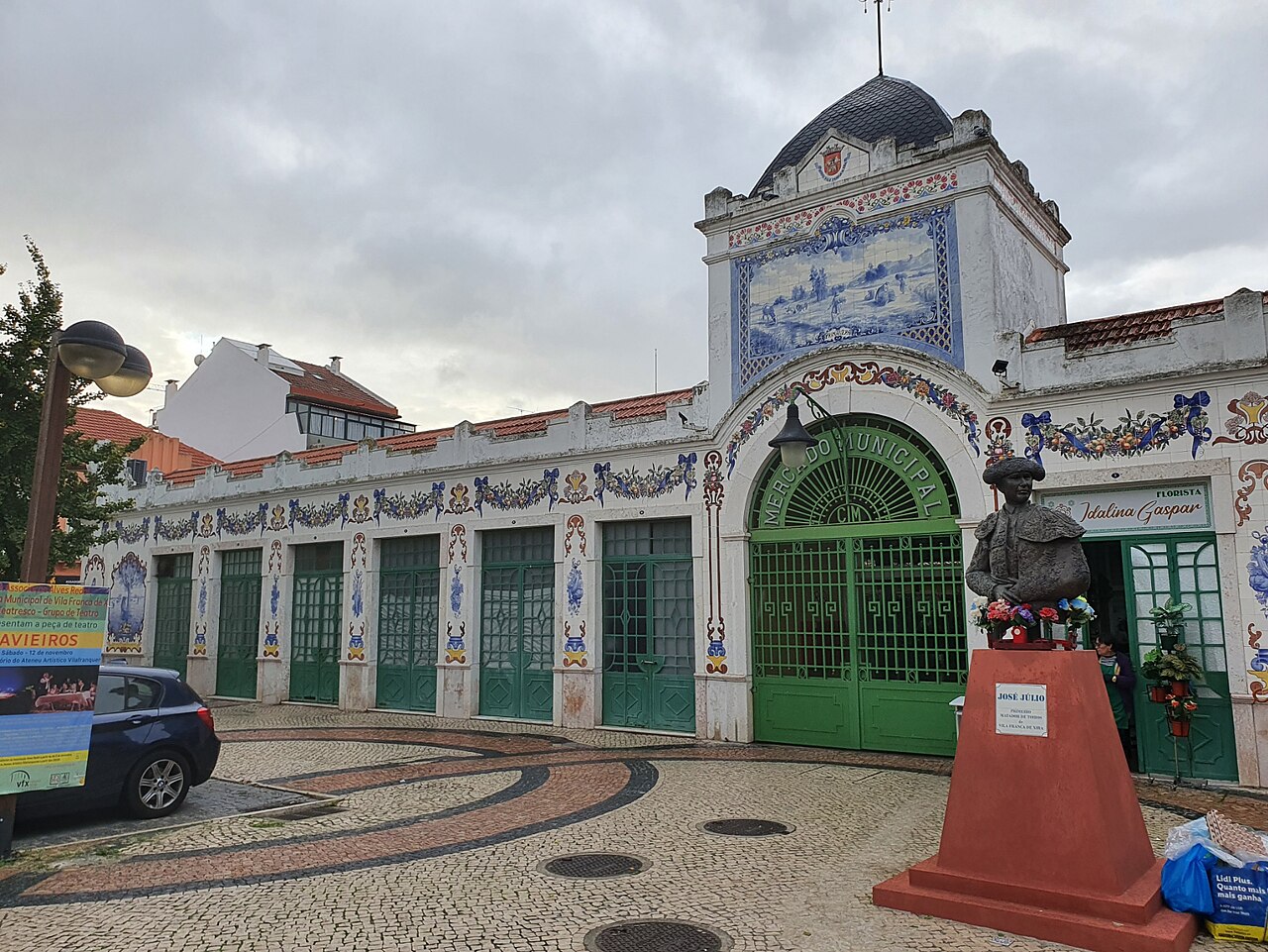
Cropped preview; see the original photograph. The photograph does not confirm the venue’s present condition.
01 / Building stories
Read a building, discover a way of living.
Opened in 1929, the market brings trade together with local memory. Sacavém tile panels depict agriculture, riverside work and regional life.
Observe the façade without blocking movement and notice how the street connects to the market. Traders and customers continue its story; ask before photographing people.
Choose a scene of work and connect tools, gestures and setting. Then look for one continuity and one change in today’s market.
What to notice
Find a tool and a gesture in a tile scene of work.
Yi invites attention to food and the relationships that make it possible: land, water, work and exchange.
Small choices matter: ask about an ingredient, buy what you need and leave room for people working. Caring for yourself can include those who feed the town.
Start with the architecture
Notice how entrances, aisles and stalls allow movement and trade together.
Bring the question into everyday life
Whose work could you understand better through today’s meal?
Try an observation here
Note an ingredient’s name and ask a trader when there is time.
What kind of meal makes you feel cared for?
A contemporary cultural reading by Xiaoxiong inspired by the I Ching. The connection with the building is an editorial perspective, not the architect’s intention or a documented historical influence. It is not fortune-telling.
03 / Nearby life
A nearby table
Dining map records within three kilometres in a straight line of the reference point. Walls, railways and slopes may lengthen the journey. Check the entrance and whether the business is open.
The map may omit businesses. Records do not confirm trading status, menus or bookings. Records with an address are shown by default; you can include the others.