The door changed
A private house became a public museum, changing who may enter. Tong Ren asks about the conditions of encounter: a collection becomes open to shared discussion through continuing interpretation and welcome.
Parte del contenido está en inglés.Leer el original en portugués →
CAS-001 / Bay & old town
Museu Condes de Castro Guimarães
Avenida Rei Humberto II de Itália, Parque Marechal Carmona, 2750-319 Cascais
01 / Historias de edificios
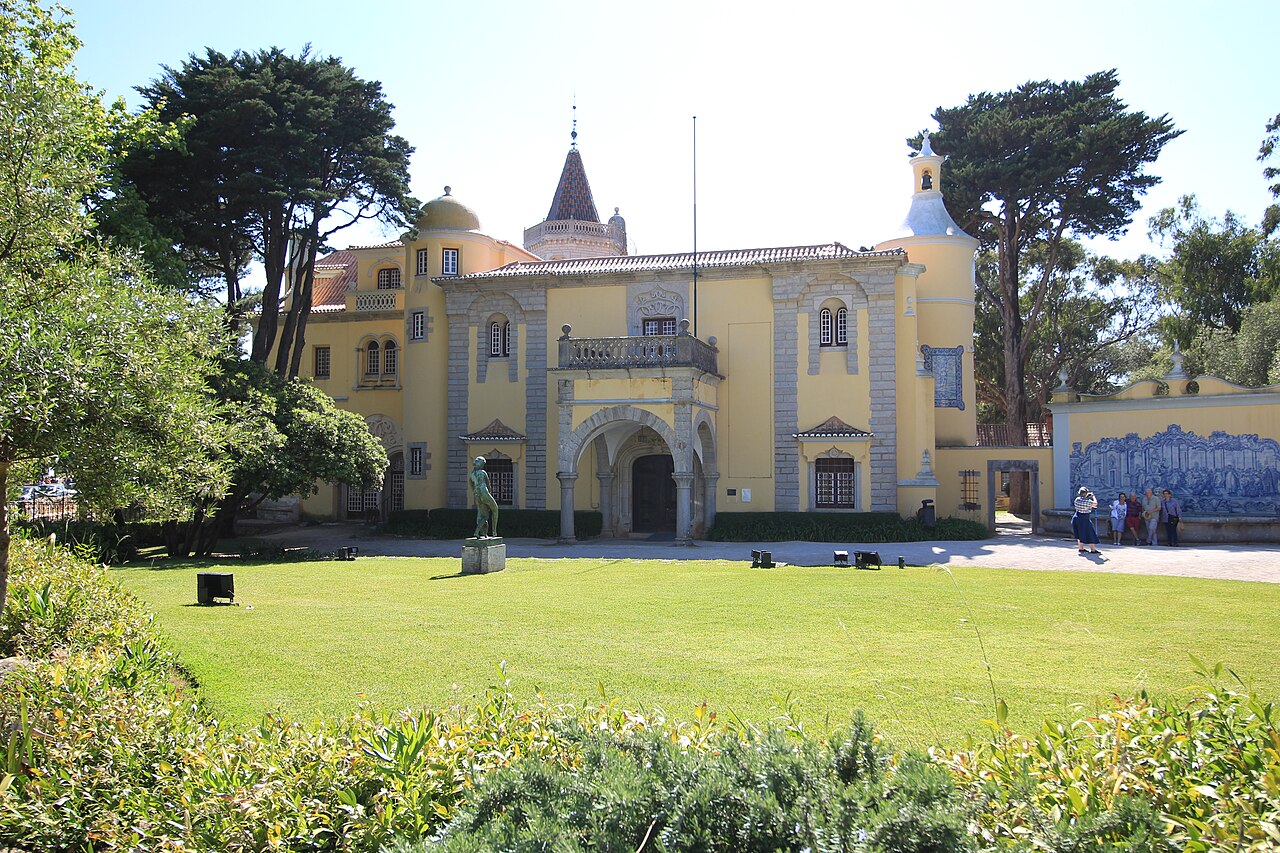
Built around the turn of the twentieth century, the former Torre de São Sebastião was a private residence. In his 1924 will, the count left the house and collection to Cascais for a public museum and library. The museum opened in 1932, giving a private collection a shared civic life.
From the park, notice the arch, towers and tiles. Consider how a home separates owner and visitor, then see whether that distance changes inside the museum.
Fuente ↓02 / I Ching reflections
A door opened to the public, seen through Tong Ren.
Above · Qian · Heaven
Below · Li · Fire
Read the six lines from bottom to top ↑
Zhou Yi · Commentary on the Image · Chinese excerpt
天与火,同人。Heaven and fire: Tong Ren. — Editorial translation of the excerpt
Original text and context ↗A shared space can accommodate differences without giving everyone the same place. Tong Ren directs attention to participation, voices that are heard and differences that remain.
This excerpt gives the natural image that opens the Commentary on the Image. The full passage relates it to personal conduct or governance in its historical context. Follow the source to read it in full. Applying it to buildings today is Xiaoxiong’s editorial proposal, not a summary of every meaning of the ancient text.
A private house became a public museum, changing who may enter. Tong Ren asks about the conditions of encounter: a collection becomes open to shared discussion through continuing interpretation and welcome.
Belonging to a city does not ensure everyone understands an object. Labels, languages and visiting arrangements make public access a practice that can be examined.
A collection’s origins, value and presentation allow different judgements. Shared memory that makes room for disagreement can move beyond the former owner’s single narrative.
Take a question to the bench
When does a private collection become part of a city’s memory?
Go to the bench and note what I saw →A contemporary cultural interpretation by Xiaoxiong. The diagram and excerpt have a source; the building connection is editorial, not architectural intent, historical I Ching influence or the venue’s position.
03 / Vida del barrio
Abrir mesas cercanas · filtros y cómo llegar →
Locales a tres kilómetros en línea recta del edificio. Muros, vías y pendientes pueden alargar el recorrido; comprueba la entrada y si el local está abierto.
Comprobando la red Banco y las reclamaciones…
El directorio puede tener omisiones. Los registros no confirman apertura, carta ni reservas. Se muestran primero las direcciones completas.
04 / El Banco
When does a private collection become part of a city’s memory?
Building reference point: 38.692077, -9.421999. Punto de referencia para buscar lugares cercanos; no confirma la entrada pública.
Hipersyl · CC BY-SA 4.0 · Ver la fotografía original ↗
La presentación puede recortar la imagen. Consulta el original. La foto no representa el estado actual del lugar.
Consultado: