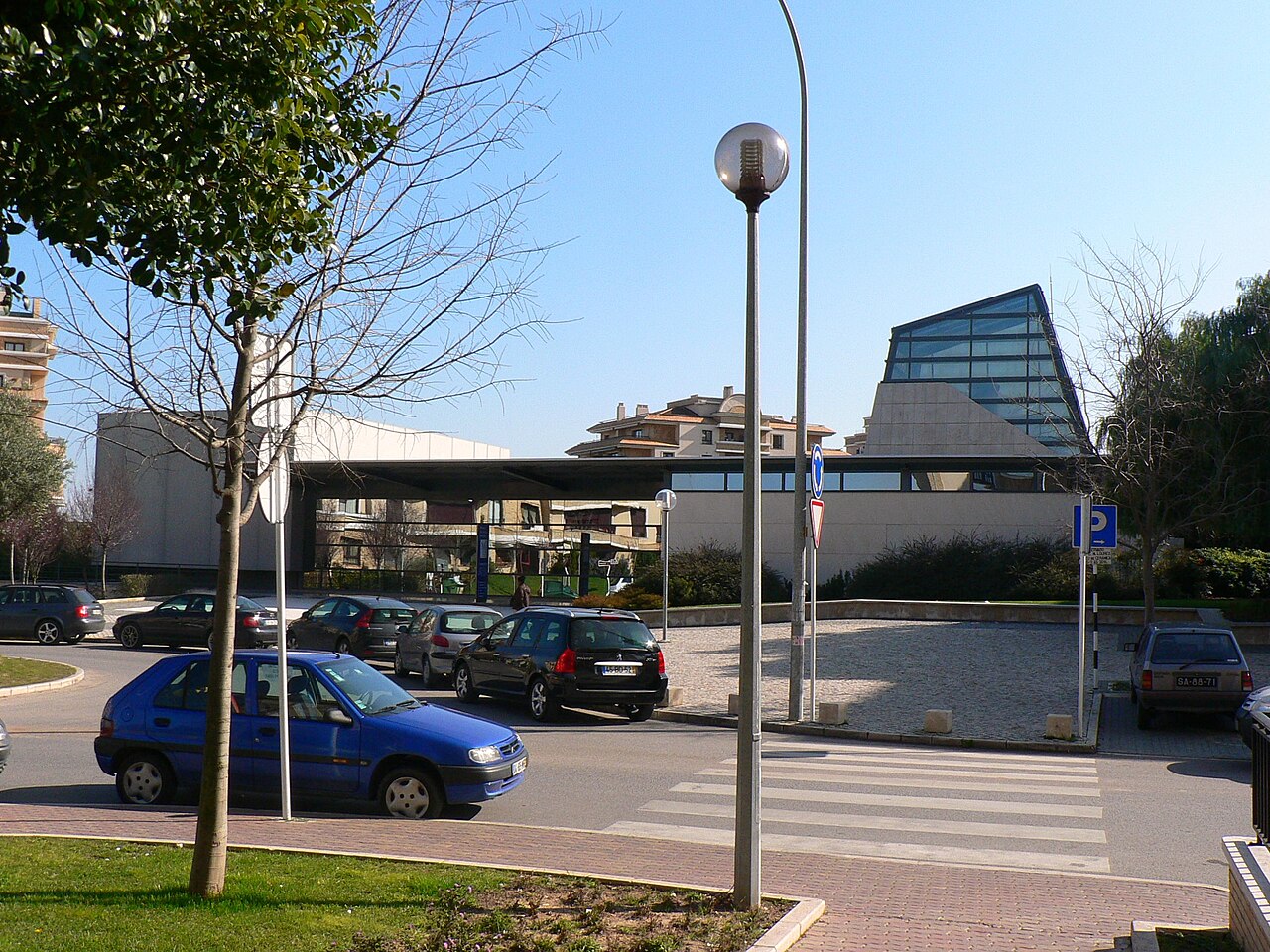
Praça Manuel Joaquim Afonso, Urbanização Real Forte, 2685-145 Sacavém
Museu de Cerâmica de Sacavém · Fotografía de archivo · No machine-readable author provided. Juntas assumed (based on copyright claims). · Public domain
01 / Historias de edificios
Lee el lugar, descubre su historia.
The ceramics factory shaped Sacavém’s work and life. Opened in 2000 on the former factory site, the museum centres on surviving kiln no. 18. Exhibition space around an industrial structure turns production facilities into interpreted local memory.
Ceramic objects involve materials, firing and collective labour. The museum also preserves factory archives and human experience. The municipality continues to list temporary closure. This page retains the story and location, but old photographs do not establish access today.
Mira de cerca
Temporarily closed. Read sources about the factory and kiln online first; arrange an interior visit only after the museum confirms reopening.
Turning a factory into a museum changes the building’s task. Workers’ experience should remain audible, and renewal needs clear reasons and practical care.
49Ge · 49
Above · Dui · Lake
Below · Li · Fire
Read the six lines from bottom to top ↑
Solid: yangBroken: yin
Zhou Yi · Commentary on the Image · Chinese excerpt
泽中有火,革。
Fire is within the lake: Ge. — Editorial translation of the excerpt
Change should respond to changed conditions. Ge subjects new uses to concrete questions: what should remain, what needs renewal and who participates in sustaining the new life?
Original text and context
This excerpt gives the natural image that opens the Commentary on the Image. The full passage relates it to personal conduct or governance in its historical context. Follow the source to read it in full. Applying it to buildings today is Xiaoxiong’s editorial proposal, not a summary of every meaning of the ancient text.
Return to this building · Museu de Cerâmica de Sacavém
01
Clues in the space
Dated archive photographs allow study of the kiln and museum relationship but do not promise current access. During closure, factory and worker records maintain a connection. Compare that understanding with the structure after reopening.
02
Observe on site
Temporarily closed. Read sources about the factory and kiln online first; arrange an interior visit only after the museum confirms reopening.
03
Take the question into daily life
Change has conditions and costs. Buildings can be adapted, but people’s experience needs deliberate recording. In your own transitions, distinguish habits no longer useful from knowledge worth taking forward.
Take a question to the bench
Which memories should survive when a place changes purpose?
A contemporary cultural interpretation by Xiaoxiong. The diagram and excerpt have a source; the building connection is editorial, not architectural intent, historical I Ching influence or the venue’s position.
Locales a tres kilómetros en línea recta del edificio. Muros, vías y pendientes pueden alargar el recorrido; comprueba la entrada y si el local está abierto.
Comprobando la red Banco y las reclamaciones…
El directorio puede tener omisiones. Los registros no confirman apertura, carta ni reservas. Se muestran primero las direcciones completas.
04 / El Banco
Siéntate un momento. Deja una observación.
Which memories should survive when a place changes purpose?