Clues in the space
From an authorised position, imagine how containers were placed and how people approached and left. Check that hypothesis against the exhibition. Past commercial use is not permission for present-day use.
Parte del contenido está en inglés.Leer el original en portugués →
ODI-009 / Caneças
Rua do Pinhal Verde, 2, Caneças
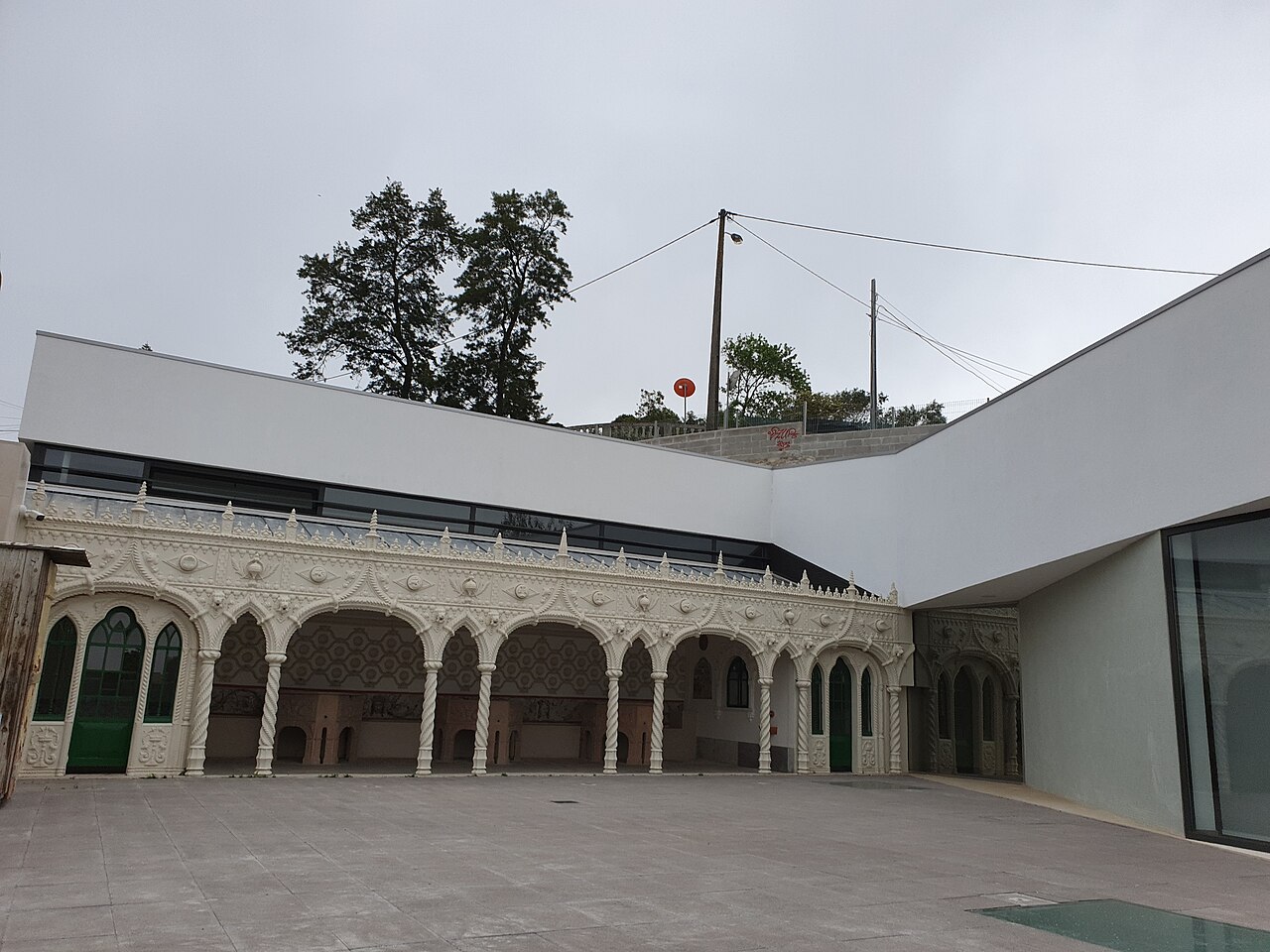
01 / Historias de edificios
Water connected Caneças with Lisbon’s everyday supply and shaped local work and life. Municipal records describe the purchase of Fonte das Piçarras in 2011, its restoration and an interpretation centre addressing both water history and its future environmental value.
The outlet, spiral columns and arch give architectural form to a useful facility. The 2020 municipal guide states that commercial exploitation was licensed in 1933. Reading the spring with the exhibition brings water back into view as a resource needing shared care.
Follow the authorised route to the outlet, columns and exhibition. Look for clues to collection and transport. A historic source does not guarantee safe drinking water today.
Fuente ↓02 / I Ching reflections
Jing directs attention to shared resources. Water reaching our hands depends on environment, infrastructure and labour. Knowing its origin makes restraint and maintenance more concrete.
Above · Kan · Water
Below · Xun · Wind / wood
Read the six lines from bottom to top ↑
Zhou Yi · Commentary on the Image · Chinese excerpt
木上有水,井。Water is above wood: Jing. — Editorial translation of the excerpt
Original text and context ↗A shared resource needs access and maintenance. Jing looks beyond a facility to relationships of provision: how do water, knowledge or services reach people, and who sustains that continuity?
This excerpt gives the natural image that opens the Commentary on the Image. The full passage relates it to personal conduct or governance in its historical context. Follow the source to read it in full. Applying it to buildings today is Xiaoxiong’s editorial proposal, not a summary of every meaning of the ancient text.
From an authorised position, imagine how containers were placed and how people approached and left. Check that hypothesis against the exhibition. Past commercial use is not permission for present-day use.
Follow the authorised route to the outlet, columns and exhibition. Look for clues to collection and transport. A historic source does not guarantee safe drinking water today.
Water, knowledge and roads depend on continuing maintenance. Reducing waste, reporting specific problems and respecting carers’ work are small contributions. Next time you enjoy a convenience, identify a person or stage that makes it possible.
Take a question to the bench
Which public resource do you rely on daily while rarely noticing it?
Go to the bench and note what I saw →A contemporary cultural interpretation by Xiaoxiong. The diagram and excerpt have a source; the building connection is editorial, not architectural intent, historical I Ching influence or the venue’s position.
03 / Vida del barrio
Abrir mesas cercanas · filtros y cómo llegar →
Locales a tres kilómetros en línea recta del edificio. Muros, vías y pendientes pueden alargar el recorrido; comprueba la entrada y si el local está abierto.
Comprobando la red Banco y las reclamaciones…
El directorio puede tener omisiones. Los registros no confirman apertura, carta ni reservas. Se muestran primero las direcciones completas.
04 / El Banco
Which public resource do you rely on daily while rarely noticing it?
GualdimG · CC BY-SA 4.0 · Ver la fotografía original ↗
La presentación puede recortar la imagen. Consulta el original. La foto no representa el estado actual del lugar.
Consultado: 2026-10-21