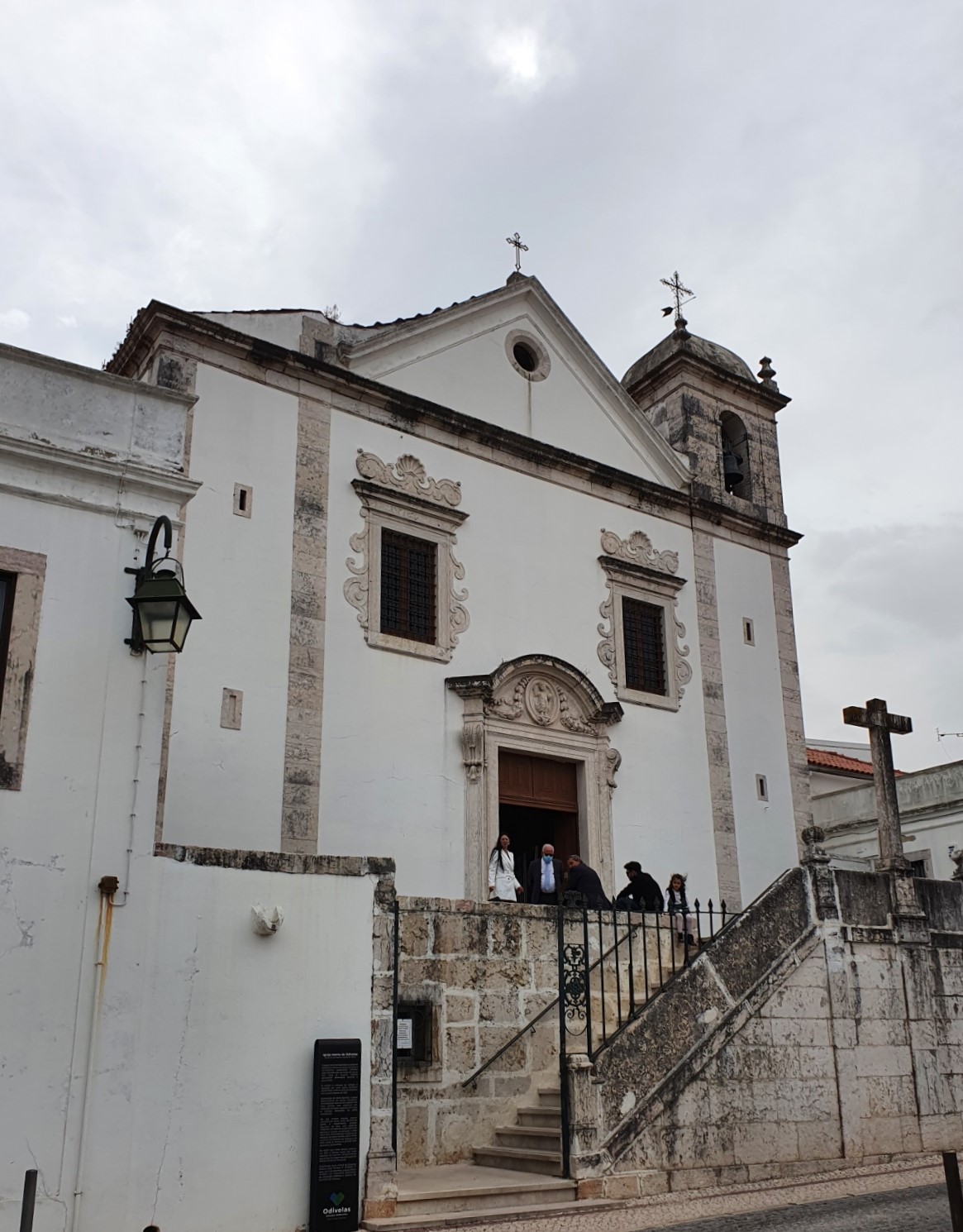
Igreja do Santíssimo Nome de Jesus · Fotografía de archivo · Fecha de la foto 2022-05-21 · GualdimG · CC BY-SA 4.0
01 / Historias de edificios
Un edificio, una forma de vivir.
The steps before the doorway already change the visitor’s viewpoint. The heritage record associates the church’s main body with late-seventeenth-century works, while most interior decoration belongs to the eighteenth century. An older font and elements bearing the date 1573 recall an earlier church.
Behind the restrained façade, gilded carving, tiles, stucco and marble shape the interior. Different materials and periods make this neighbourhood church readable in layers. It remains a religious space, so observation must respect the people using it.
Mira de cerca
From the street, examine the relationship between steps and doorway. If entry is permitted, compare one wall material with the interior light. Keep quiet during worship.
The positions of heaven and lake form Lü’s image. We use it today to consider care in action: understand rules at a threshold, while asking whether they are fair and accommodate different bodies.
Original text and context
This excerpt gives the natural image that opens the Commentary on the Image. The full passage relates it to personal conduct or governance in its historical context. Follow the source to read it in full. Applying it to buildings today is Xiaoxiong’s editorial proposal, not a summary of every meaning of the ancient text.
Return to this building · Igreja do Santíssimo Nome de Jesus
01
Clues in the space
Steps separate the street from the entrance, making arrival gradual. Doorway, central passage and side spaces serve different activities. The church’s order also depends on the space visitors and regular users leave for one another.
02
Observe on site
From the street, examine the relationship between steps and doorway. If entry is permitted, compare one wall material with the interior light. Keep quiet during worship.
03
Take the question into daily life
Keeping a passage clear, choosing when to ask a question and seeking permission before photographing are practical forms of respect. If you cannot enter, read an exterior wall carefully and leave the interior for another occasion.
Take a question to the bench
What gesture expresses respect when you enter someone else’s everyday space?
A contemporary cultural interpretation by Xiaoxiong. The diagram and excerpt have a source; the building connection is editorial, not architectural intent, historical I Ching influence or the venue’s position.
Locales a tres kilómetros en línea recta del edificio. Muros, vías y pendientes pueden alargar el recorrido; comprueba la entrada y si el local está abierto.
Comprobando la red Banco y las reclamaciones…
El directorio puede tener omisiones. Los registros no confirman apertura, carta ni reservas. Se muestran primero las direcciones completas.
04 / El Banco
Siéntate un momento. Deja una observación.
What gesture expresses respect when you enter someone else’s everyday space?